
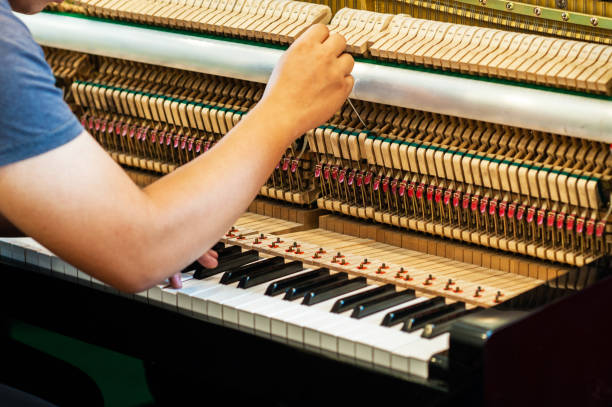
Old pianos usually have much more than just musical value; they hold history, art, and emotional meaning. Most owners are curious to know whether they can continue to play the instruments beautifully or whether they have been permanently handicapped by old age. The positive part is that age is not the only reason a piano may not receive high-quality care. Those instruments that are decades old can still be restored with the right knowledge to a stable tune and reliable playability.
The older pianos are especially well presented, thanks to traditional construction techniques, solid woods, and hand-made elements that often make them particularly well-suited for restoration. When approached correctly, services such as piano tuning in Manchester demonstrate that age and excellence can comfortably coexist in piano care.
What Challenges Do Old or Antique Pianos Present?
The environment and wear and tear on the materials of old pianos naturally cause problems with age. Nevertheless, these difficulties can generally be addressed through a professional evaluation.
- Structural Wear
Drying out or even slight movement of wooden parts may occur over decades. This can cause tuning instability, but it can be corrected with keen observation to determine which adjustments are needed before tuning starts.
- Worn Action Parts
The antique piano’s felt, leather, and bushings will compress or harden over time. Originality can be preserved by reconditioning or replacing these elements to restore touch and responsiveness, without altering the originality.
- String and Pin Condition
The strings will corrode, and the tuning pins will become loose. Experienced technicians carefully determine whether parts can be repaired or need to be replaced to maintain the instrument’s tone and integrity.
All these difficulties require patience and expertise rather than active intervention, which is why expert treatment is crucial.
How Can Antique Pianos Achieve High-Quality Repair and Tuning?
Antique pianos can receive excellent repair and tuning when handled appropriately.
- Assessment Before Tuning
An examination will allow the piano to safely bear pitch. This avoids placing a burden on the older parts and achieves a realistic tuning goal.
- Gentle, Incremental Tuning
Gradual tuning of the piano to modern pitch helps preserve its structure and enhances long-term stability, rather than a sudden transition. The method is usually applied in professional piano tuning in Manchester for older instruments.
- Preservation-Focused Repairs
Repairs are conducted with favour to original materials. In case of replacement, the required parts are selected to be compatible with the original instrument sound.
- Climate Awareness
The old pianos are sensitive to temperature and humidity. Environmental control and proper positioning significantly enhance the lifespan of tuning.
- Experienced Craftsmanship
Technicians experienced in historical piano repair are best suited for old pianos. Repairs can be made by understanding how previous instruments were constructed in ways that improve performance rather than harm it.
Looking for Expert Care for Your Piano?
It is a fact that old and antique pianos can receive the best repairs and tuning when handled professionally. Old age is not a constraint, but a complication. These instruments can go on to make beautiful music for generations with proper evaluation, preservation-based restorations, and expert tuning. Professional piano tuning in Manchester can be an example of quality care, ensuring that history and performance are not in conflict with one another.
Eric the Piano Fixer specialises in thoughtful repair and precise tuning for pianos of all ages. Whether your instrument is modern or antique, his experience focuses on preservation, performance, and long-term stability. Why trust your piano’s future to chance when expert care can bring its voice back to life?

Recent Comments